
Notes from the Operating Table
A fledgling craftsman’s approach to structure after the fact

Preface
If you’ve read my earlier piece, ‘Light, Dark, and the Rest in Between’, you might already have an idea of those universal themes I’m seeking in the construction of my work. Those same concepts that exist in music, visual art and writing under different names. Painting teaches me to see big shapes and tonal value. Music teaches me to respect dynamics. They’re all part of the same whole. Writing is just another place to use the same concepts.
As a writer, I’m a pantser by temperament, improvising until I hit a corner, outlining my way out, then go right back to pantsing like I learned nothing.
Most of the time I know the opening scene and I know the final one. I can see the first fencepost and the last. I might, sometimes, plot four or five scenes ahead when I feel myself drifting toward a dead end, but I do not build a full outline. I will write scenes out of order, because the destination is clear and the road is not. The journey is a revelation to me, and hopefully to the reader by proxy.
But I haven’t found a complete answer for myself. Not even close, and I don’t want to pretend I’ve solved the craft. By the All-Father Odin, I’m so far from that.
For me, every novel is a new sandpit. Sometimes I have a clean ending in my sights. Sometimes I have only a vague shape in the distance and I stumble towards it anyway.
My last novel, Soul of a Gun — out in late 2026, watch this space — was one of those. I didn’t have a clear ending, only an idea. Writing it was a slog, which is a bit ironic, considering the book itself is largely the tale of an arduous journey… my Two Towers, if you will. I used the same basic process, but one piece was missing, a definitive final scene I usually rely on.
And yet I think it is the best book I have written to date.
So this is by no means a prescriptive piece. It’s not even advice, really. It is simply an honest look at how I get the work done without turning the art into just another mere facsimile of a book. I want the story to breathe for me, and more importantly, for the reader.
Because ultimately, it’s the reader to whom I’m ultimately serving.
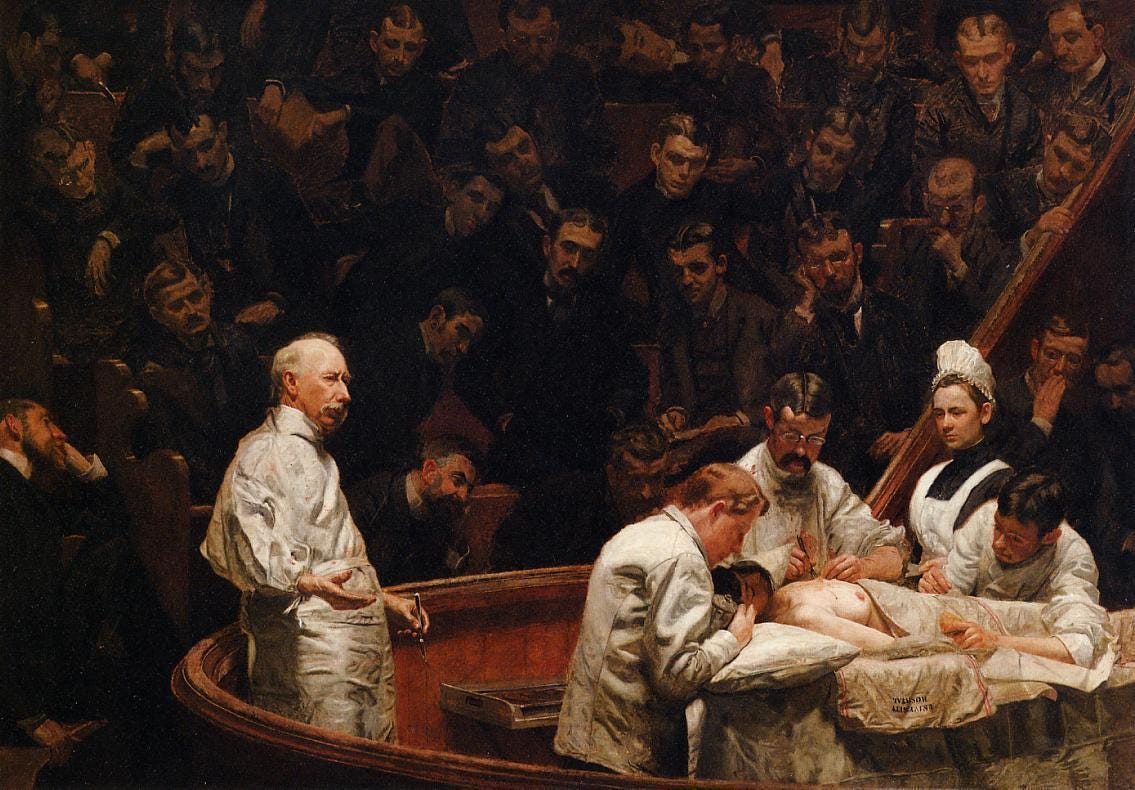
Structure isn’t a formula. It’s just what stops the whole thing collapsing.
When people argue about structure, it often sounds like a religious fight. I say, fuck all that, it’s just a set of bones that makes the flesh somewhat recognisable in the end. Don’t get me wrong, the bones are critical to give the flesh shape, but who says you need to put them in first?
Structure, in practice, is simply the pattern of pressure and change that keeps a long story from sagging in the middle and falling apart at the end.
A novel has to manage a few plain things:
Pressure, what the story does to the characters
Change, what the characters become under that pressure
Payoff, what the reader was promised back on page one
Most systems have different names for the same bones. Destabilise the world. Force commitment. Escalate the cost. Reveal the deeper truth. Close the easy doors. Drive toward a final confrontation. Let the consequence land.
You can write without an outline and still hit all of that. You just have to be willing to shape it later, when you can finally see the whole beast.
A light touch on value: composition, not just plot
I will not labour the metaphor here, but it’s useful.
A novel isn’t one image. It is a sequence of images and other senses you walk through. So there is composition at work whether you like it or not. Some sections carry more intensity, some less. Some scenes are focal points, others are scaffolding.
From a visual art perspective, when I’m drafting I sometimes think of it like a rough value map. Nothing fancy. Just a way to see contrast.
Too many peaks in a row and the reader goes numb. Too much same-level pressure and the book turns to mid-grey drudge. Readable, competent, but in the end…forgettable.
So you could say even at first draft stage, I’m thinking unconsciously about structure in a basic way. I’m kneading the flesh, providing room for the bones to sit when I finally suture them in.
Popular structures are just different ways to manage pressure
I’m not anti-structure. I’m anti-structure-as-religion.
Most popular models, signposts, circles, beat sheets, escalation curves, are doing the same work:
They make sure the story turns instead of drifting
They make sure costs stack instead of resetting
They create rhythm rather than a flatline
They make the ending feel inevitable rather than random
I can use any of those models as a diagnostic, but I do not want them in the driver’s seat. If I draft with a strict beat list on a spreadsheet, the book starts to feel like a production line Model T Ford. I don’t want that. I want a Lamborghini. Handcrafted, dangerous and sexy as hell.
I would rather write a draft first, then borrow the tools to model the sleek lines after the fact.
My process: draft first, then find the spine
1) Two anchors, when I am lucky enough to have them
When I do have a strong beginning and a clear ending, it saves me a lot of wandering. The opening makes a promise. The ending cashes the cheque.
Even if the middle meanders a little, those anchors keep the book facing the right direction. I can chop and change after the fact.
2) A short headlight
I allow myself to plot four or five scenes ahead when I need to. Not because I’m trying to be tidy, but because I don’t want to drive into a ditch.
When I look ahead, I’m mostly checking:
Do I know what the next turn is?
Am I escalating the narrative, or just making noise?
Are the choices getting riskier, or are they static?
Sometimes this is the longest part of the process. The ditch is fast approaching and there’s seemingly no way to turn to avoid it. I normally go outside, stick some music on my phone, walk, and try to nut it out. Sometimes it’s a hell of a lot of walks but in the end there’s always a turn.
3) Out of order, on purpose
Some scenes arrive hot. You can feel them almost viscerally. For me they come in cinematic form. The confrontation, the confession, the reveal, the irreversible decision. If I wait until I reach them chronologically, the voltage can seep out… and this is a monster we want to give life to.
So I write them when they are alive, and I build the roads to them later.
4) Assembly and rewrite
My first draft is often a pile of strong moments and half-built bridges. The second stage is where structure becomes visible and I will rely on structure to formulate a cohesive book. I swap scenes. I merge scenes. I cut them to to avoid indulgence. I make sure events compound instead of resetting.
My personal choice in structure is a basic three or four act affair, but with the signposts laid down from James Scott Bell’s Superstructure. But I’m not wedded to that for every book. After watching Robert Eggers, The Northman, I’ve been intrigued by the five act Shakespearean structure. I’m more than interested in exploring that particular avenue.
And when I don’t have that ending anchor, as with Soul of a Gun, I lean harder on structural theory at the second draft stage. I cut, chisel and embellish my way into the truth of what the book wants, then I build the ending in revision rather than chasing it from page one.
Sometimes that’s miserable. Sometimes that’s the price of the good stuff.
A simple rhythm tool, optional but handy
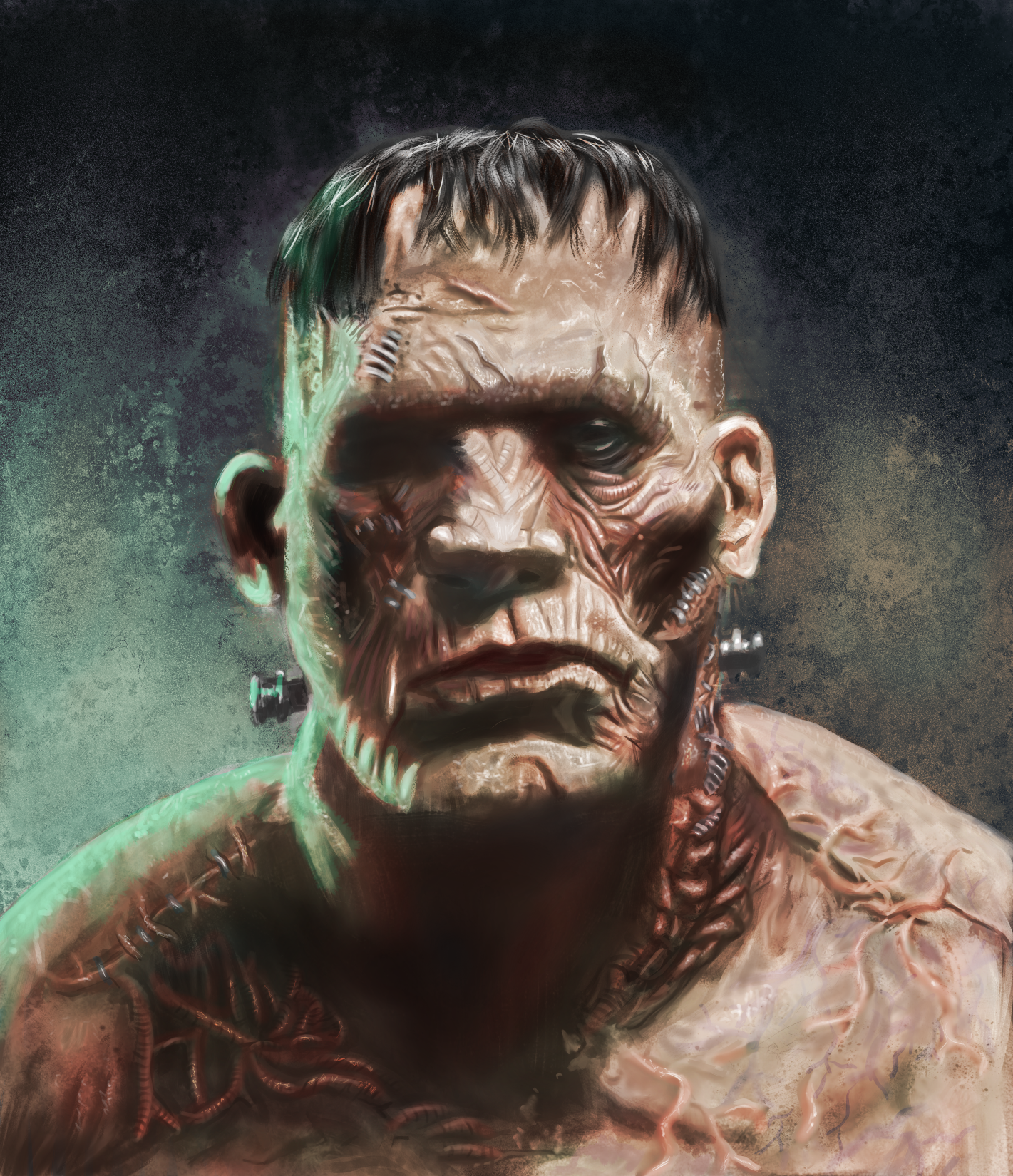
For me an occasional problem with adding the structural component, after the second draft, is it can sometimes still be too rigid. It’s not enough to have the body on the slab before you. You need to be Victor Frankenstein harnessing the power of electricity into your particular Adam.
If I worry the draft has become all one temperature, despite the bones being in all the right place, or the novel some how just doesn’t just feel right, I do a quick pressure pass across scenes and chapters. Just a rough rating, 1 to 5.
Restful / introspective scene or a respite.
Low simmering scene with some form of conflict for character or plot development
A pressured scene
A high pressure scene
Peak moment
I’m not trying to obey a pattern. I’m checking for reader fatigue, too many highs, or drift, too much sameness. Most scenes should exist between 2 and 4 (in the midtones from a visual art perspective) with just pops of 1 and 5 for respite. If I think of the draft in a symphonic sense, I begin to manipulate the structure of the novel by utilising lulls and interludes for breathing room, episodes and transitions to move the story into the next gear, long crescendos and a bit of stringendo to build the pressure, then a clean climax like a full-orchestra hit, followed by a decrescendo or a sudden drop to quiet, and a coda to bring it home.
That is the point I’m beginning to realise. No matter what art medium I engage with it’s all the same conceptual thing. I can think of my story in a different paradigm to enrich the narrative meaningfully. It’s basically all the same. But by switching paradigms in the arrangement it adds something… at least I think it does. Then it’s just a matter of reordering, compressing, or sharpening the turns.
This isn’t a process for a structural purist, because it sometimes means creating a monster whose knees point the wrong way. It’s a crude system, but it’s useful. That’s enough, for this wannabe artist.
Afterword: this is my way, not the way
Everything above is just my method, and it’s an inefficient one.
It is cumbersome. It wastes miles. I write out of order, I shuffle, I rewrite, I rebuild the bridge after I have already crossed the river twice. I am not presenting it as a clever hack. It simply happens to be the way I can get a book to feel like something real in my hands. As cool-as-fuck as I can make it. My version of a living narrative.
And please remember, I’m still a student of the game. Thousands of miles from anything nearing mastery.
So please don’t read this as a prescription. It may not be your way of working. It probably shouldn’t be your way of working if your goal is speed, volume, and consistency, especially if you are taking a rapid release approach. In that world, outlining from the outset is hard to argue with. It’s efficient, and it helps you deliver the kind of clean, familiar story that readers reliably enjoy, particularly if you understand and hit the common tropes.
And I do like tropes. I’m not anti-trope. I’m simply not wedded to them.
I’m more a craft-based than market-led artist. My aim is to write unique tales, that still, more or less, fall inside the fences of one genre or another. In plain terms, I write the books I want to read first, and what the market might want second.
I don’t think that’s a route to quick commercial success. But I do think those outlier books, the slightly odd ones, are sometimes the ones that catch that lightning-in-a-bottle quality. In their own lanes, I think writers like Joe Abercrombie, Stephen King, Robin Hobb, and Larry McMurtry have produced that kind of work. I don’t know if any of them worked or work like I do, likely not, but the result, books with a strong, singular, unique flavour, is what I am reaching for.
As for me, I am not especially interested in writing at volume to secure instant profit. I prefer a measured craftsman’s pace. That’s just who I am. Nothing more. I publish when I feel I’ve made a piece worth keeping, something a reader might return to, not just consume and forget. That’s the goal, anyway.
Commercial success would be awesome, and I know I need to apply this approach to business and marketing. Money solves a lot of problems. But for me it only matters if I am selling something I genuinely believe has value.
Most days I’ve only got a dim lantern and the sound of my own boots to light the way. The path shows up a yard at a time, and somehow that is enough to reach the place I was aiming for. How do you find your way through the fog?
Author Links
If you made it this far, the transmission’s still clear. A few side doors, if you’re curious:
📖 Get your free copy of Hunger of the Leaves here.
A dark little novella about hunger, ghosts, and the laws that never quite die.
📘 Buy Enter the Lawbringer at all good retailers here.
Or better yet — ask for it at your local public library. I’m a librarian; I believe in the cause.
📂 Visit my Facebook page here.
Updates, oddities, and the occasional rant about westerns and weird fiction.
🎨 Check out my artwork on Instagram here.
Sketches, covers, strange experiments in ink and colour — all part of the same fever.
No enlightenment promised. Just stories, pictures, and a few good ghosts.